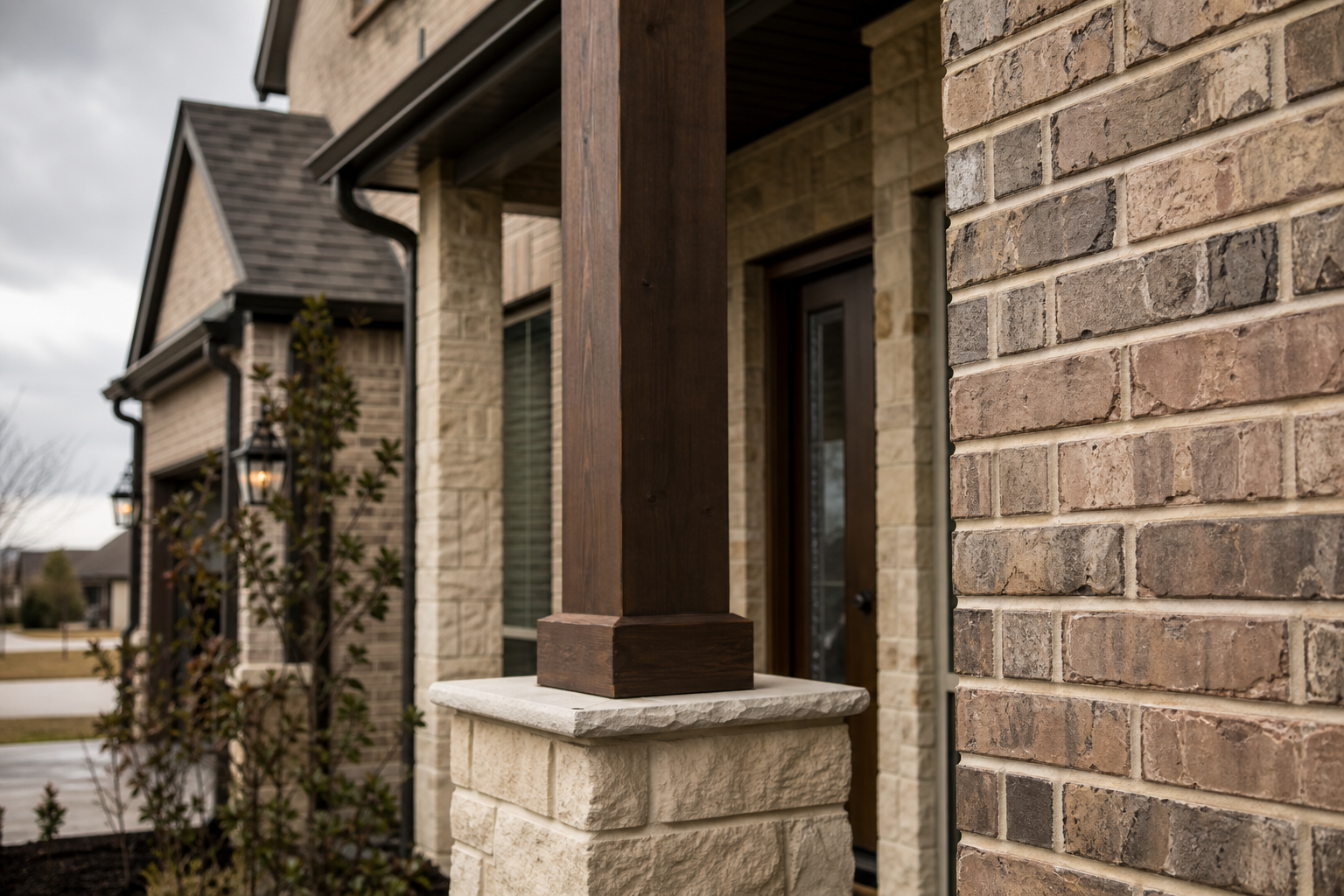
Whether Buying or Building Costs More in Prosper and Celina

There is no single answer, and that is exactly the point. In Prosper and Celina, the advertised base price of a new build can look attractive compared to resale, but once you layer in lot premiums, design-center upgrades, and special district assessments like PIDs and MUDs, the math shifts fast. Resale homes carry their own cost considerations, but what you see in the listing price is generally what you get. The right answer depends on your budget, your timeline, and which specific community you are comparing.
Key Takeaways
- The median closed sale price in Prosper’s 75078 ZIP code was $835,000 across 532 closings over the six months ending August 31, 2026, per Resideline market data.
- Over the three months ending July 2026, Prosper’s median sale price was approximately $885,000, down roughly 1.3% year-over-year, according to Redfin.
- New-build base prices in Prosper and Celina do not include lot premiums, structural options, or design-center upgrades, which can push the final contract price well above what was advertised.
- Many new-construction communities in Prosper and Celina sit inside PIDs or MUDs that add annual assessments on top of standard city, county, and school taxes, a cost that rarely exists in older resale neighborhoods.
- Builder incentives in 2026 commonly take the form of rate buydowns, closing-cost contributions, or design-center credits, and vary significantly by builder, community, and time of year.
How Do New-Build Costs in Prosper and Celina Really Compare to Resale?
The base price a builder advertises is the floor, not the ceiling. I walk every buyer through this before they set foot in a model home, because the sticker shock at the design center is real.
When you buy a resale home in Prosper, the listing price reflects the actual condition and finishes of the home as it stands. The hardwood floors, the extended patio, the upgraded kitchen — they are already in the price. With a new build, you start with four walls and a standard package, and then you build up from there.
According to Resideline’s 75078 market dashboard, the median closed sale price in Prosper over the six months ending August 31, 2026 was $835,000 across 532 closings, while the median asking price of current listings at that same point was $899,000. That spread matters when you are comparing a resale offer to a new-build contract total.
Redfin’s Prosper market data shows the median sale price over the three months ending July 2026 was approximately $885,000, down about 1.3% year-over-year. A separate Hoodline report drawing on Redfin data put the Prosper median at around $869,480 for the three months ending May 2026, and noted that Celina’s prices, while rising, still tend to run lower than Prosper’s, making Celina the market where buyers often get a bit more house or lot for the same budget.
What Lot Premiums and Upgrades Actually Do to a New-Build Price
Builder communities in Prosper and Celina price their base floor plans competitively. That base gets you the plan, the standard finishes, and a standard lot. Everything else costs extra.
Lot premiums are charged for features like cul-de-sac placement, greenbelt views, larger square footage, or proximity to amenity centers. In amenity-rich or gated communities, those premiums can be significant. The builder discloses them in a price sheet, but buyers often underestimate how much they add to the total.
Design-center upgrades cover structural options (extended patios, media rooms, three-car garages, extra bedrooms) and cosmetic finishes (flooring, countertops, cabinetry, appliance packages). Structural options are worth prioritizing because retrofitting them later is expensive or impossible. Cosmetic upgrades can sometimes wait, but the temptation at the design center is real, and the final contract number can climb fast.
With resale, you skip that process entirely. The home has what it has. For buyers who want predictability, that is a genuine advantage, even if it means living with someone else’s choices for a while.
How Do PIDs and MUDs Change the Cost of Owning a New Build in Prosper and Celina?
This is the piece most buyers miss, and it is often the biggest cost difference between a new build and a resale in the same general area.
Texas law authorizes the creation of Municipal Utility Districts (MUDs) and Public Improvement Districts (PIDs) to fund infrastructure in developing areas. Many of the newer master-planned communities in Prosper and Celina sit inside one or both. That means buyers in those communities pay an additional annual assessment on top of their standard city, county, and school district taxes.
The Texas Commission on Environmental Quality oversees MUDs statewide, and both the City of Celina and City of Prosper publish special district disclosures for their respective subdivisions. The key point is that two homes with similar purchase prices — one in a new PID community, one in an older resale neighborhood without a special district — can carry meaningfully different annual tax bills.
In some Celina communities, PID assessments are structured as annual installments that run for years. Others offer a lump-sum payoff option at closing. That tradeoff matters: paying off the PID upfront costs more at closing but lowers your annual carrying cost. Leaving it in place keeps more cash in your pocket now but adds to your effective tax rate every year you own the home.
For authoritative rate information specific to a parcel, the Collin Central Appraisal District and the Collin County Tax Assessor-Collector publish current taxing-unit breakdowns by property. I run side-by-side tax comparisons for my clients when they are weighing a new build against a resale — it is one of the most useful things I can do before they make a decision.
| Cost Factor | New Build (Prosper/Celina) | Resale (Prosper/Celina) |
|---|---|---|
| Purchase price transparency | Base price only; lot premiums and upgrades added separately | Listed price reflects current finishes and condition |
| Lot premiums | Common; varies by location within community | Not applicable; lot value baked into price |
| Design-center upgrades | Separate line items; can be substantial | Not applicable; upgrades already reflected in price |
| PID or MUD assessments | Common in newer master-planned communities | Rare in older established neighborhoods |
| Builder incentives | Rate buydowns, closing-cost credits, design-center credits (negotiable, varies by month) | Seller concessions possible; fully negotiable |
| Timeline to move in | Several months to close to a year for new construction | Typically 30–60 days after going under contract |
Do Builder Incentives in 2026 Make New Construction More Competitive?
Sometimes, yes, and this is where timing and community-level knowledge matter a lot.
Builder incentives in Prosper and Celina are not fixed. They shift month to month based on inventory levels and sales pace. Builders have been leaning on incentives more aggressively in recent years. In this market, the most common forms are temporary or permanent rate buydowns through the builder’s preferred lender, closing-cost contributions, and design-center credits.
Those incentives can genuinely offset some of the cost gap between a new build and a comparable resale. But they are not guaranteed, and they are not uniform across communities. In phases with limited lots near new schools or amenity centers, builders often scale back incentives because demand does the work for them. In communities with more inventory or slower traffic, the incentives get more aggressive.
The right way to evaluate this is to compare total net cost: base price plus lot premium plus estimated upgrade spend plus PID or MUD assessments over your expected ownership horizon, minus any builder incentives. That number tells a very different story than the base price alone. According to NAR research, buyers who work with an agent during new-construction purchases are better positioned to negotiate on incentives and understand the full cost picture before signing.
Resale sellers in Prosper and Celina can also offer concessions, closing-cost credits, repair credits, and similar items, all of which are negotiable and documented through TREC promulgated contract forms. Broker fees and commissions on either side are fully negotiable and not set by law; there is no standard or customary rate.
Your specific numbers depend on which community you are looking at, what phase the builder is in, and what the resale inventory looks like at that moment. That is exactly the kind of comparison I run with my clients before they commit to either path.
Frequently Asked Questions
Is it cheaper to buy a resale home or build new in Prosper right now?
Neither option is automatically cheaper — it depends on the specific community, the builder’s current incentives, and whether the new-build sits inside a PID or MUD. The median closed sale price in Prosper’s 75078 ZIP was $835,000 over the six months ending August 2026, per Resideline, but new-build final contract prices can land above or below that once lot premiums and upgrades are added. The most useful comparison is total net cost over your expected ownership horizon, not just the advertised price on either side.
How do PIDs and MUDs in Celina affect my monthly payment compared to buying in an older neighborhood?
A PID or MUD assessment adds an annual charge to your property tax bill that typically does not exist in older resale neighborhoods without special districts. This means two homes at the same purchase price can carry meaningfully different monthly carrying costs if one sits inside a special district and the other does not. Some Celina communities allow buyers to pay off the PID balance at closing to eliminate the ongoing assessment, which trades a higher upfront cost for lower annual cost, worth modeling against the resale alternative.
What kind of builder incentives are typical in Prosper and Celina in 2026?
The most common builder incentives in Prosper and Celina right now are rate buydowns through the builder’s preferred lender, closing-cost contributions, and design-center credits. These incentives are fully negotiable and vary by builder, community phase, and month — builders tend to be more generous when inventory is higher or sales traffic is slower, and they pull back in high-demand phases. Never evaluate a new build on base price alone; factor in what the incentive package is actually worth to you.
Do new construction homes in Prosper have higher property taxes than resale homes?
Not automatically, but many new-construction communities in Prosper and Celina carry PID or MUD assessments on top of the standard city, county, and school district rates, and those assessments do not typically apply to older resale homes in established neighborhoods. The Collin Central Appraisal District publishes taxing-unit breakdowns by parcel, and I always run a side-by-side tax comparison for clients weighing a new build against a resale to make sure the full picture is on the table.
When I build a home in Prosper or Celina, how much more should I expect to pay for upgrades over the base price?
There is no fixed number, but the gap between base price and final contract price at the design center is real and often surprises buyers. Structural options like extended patios, media rooms, and three-car garages tend to be worth prioritizing because they are expensive or impossible to add later; cosmetic finishes can sometimes be upgraded post-closing if you need to keep the initial contract in check. The best approach is to set a firm design-center budget before you walk in, and I help my clients do exactly that before their first builder appointment.
Do all new-build communities in North Texas have PIDs or MUDs, or can I find new construction without them?
Not all new-build communities carry PID or MUD assessments, but many of the larger master-planned communities in Prosper and Celina do. Availability of new construction without a special district depends on the specific subdivision and its financing structure; city and county public records disclose which parcels are inside special districts. This is one of the first things I check when a client is comparing communities, because it has a direct impact on long-term cost of ownership.
About Ana Porto, REALTOR®
Ana Porto is a Texas REALTOR® specializing in the master-planned communities of North Texas, with a focus on Prosper, Celina, and the surrounding areas of Collin and Denton Counties. Whether you’re a first-time buyer navigating new construction or an empty nester ready for your next chapter, Ana brings deep local knowledge and a personal touch to every transaction. Licensed with Real Broker, she is committed to helping buyers and sellers find their perfect fit in some of DFW’s most sought-after neighborhoods.
Equal Housing Opportunity. Ana Porto, TX License #0578764, Real Broker. Member, National Association of REALTORS® (NAR); licensed by the Texas Real Estate Commission (TREC). This article is general information only and does not constitute legal, tax, or financial advice. Confirm your own costs and tax obligations with your closing agent, tax advisor, or lender.
Categories
Recent Posts